Wallpaper Samples Show the Design. A Visualizer Shows the Decision
4 Min Read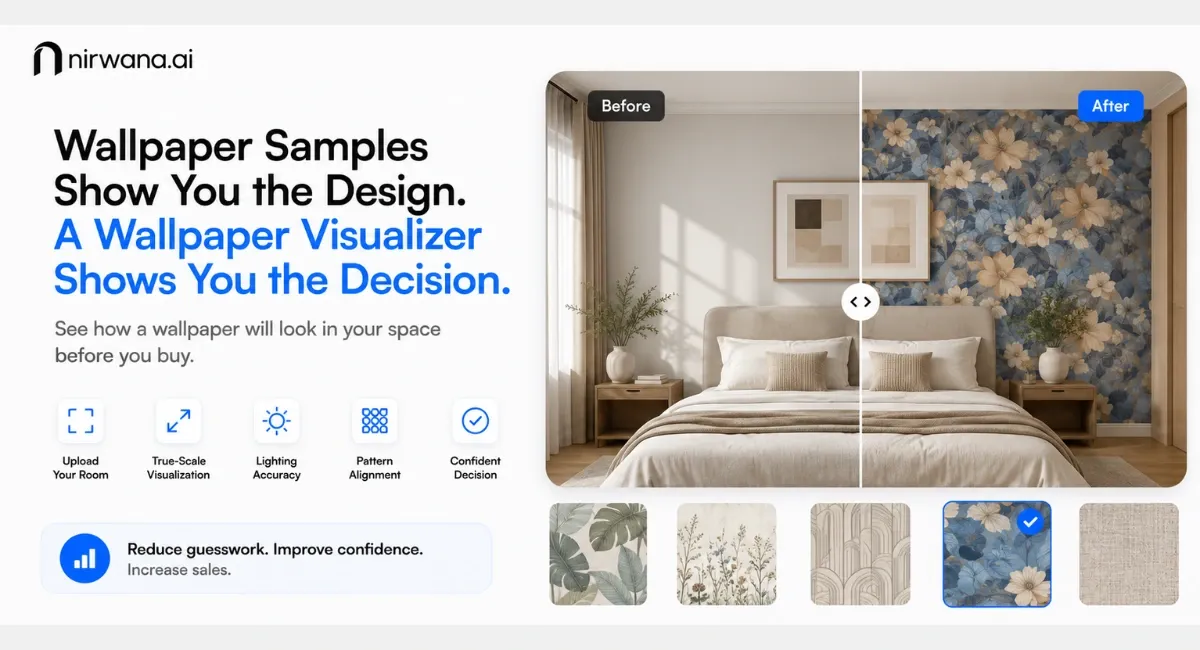
August 12, 2026
Wallpaper is one of the products where selecting a product appears to be easy, until a customer has to actually make a choice.
One of the patterns may be stunning on a product page. A sample might seem perfect to the hand. When this particular design is repeated across a whole wall, however, all the scale, repetition, lighting, room size and overall visual impact change.
That is exactly where a visualizer wallpaper experience becomes valuable.
In the past, customers would have to conjure up an image of what the wallpaper would look like in their home before purchasing. Well, no more.
To us, it's more than just a design element. It is a sales tool which helps to rescue one of the largest hurdles in the wallpaper purchasing process uncertainty.
The Real Challenge in Selling Wallpaper
Wallpaper can be a very visual product, but still is sold using relatively small product images, swatches, catalogues and sample books.
The problem is simple.
A 20cm sample is not enough to give a customer an idea of how a botanical print will feel on a 12ft wall.
A thumbnail image of the product can't tell them if their bedroom will look smaller by using dark wallpaper.
And a showroom sample cannot automatically show how a design will work with the lighting and dimensions of their actual room.
Customers naturally start asking:
Will this pattern look too busy?
Is the print too large or too small?
Will the wallpaper make my room look darker?
Should I use it on one wall or the entire room?
Will the repeat look good once it covers the full surface?
Every unanswered question adds friction.
And when wallpaper involves material cost, installation cost, and effort to remove or replace, customers become even more cautious.
Wallpaper Buying Behaviour Is Changing
Today's customer wants more than inspiration.
They want confidence.
We are seeing a shift from:
"I like this wallpaper."
to:
"Let me see how this wallpaper would look in my room.”
This is why it's more and more crucial for wallpaper manufacturers, distributors, ecommerce brands, and showrooms to have a wallpaper visualizer.
Mood boards, samples, screenshots, editing applications, and even manual mockups are tools already accustomed to by customers to help them grasp the appearance of wallpaper.
AI visualization simply makes that process faster and far more convenient.
Instead of depending on imagination, buyers can make decisions using their own room as the reference.
What AI Visualization Changes
A good wallpaper visualization system does more than place an image over a wall.
It must believable the outcome.
For instance, a customer purchasing a big floral wallpaper for their bedroom.
If they don't see it in a visual form, they can only look at the pattern as a flat image.
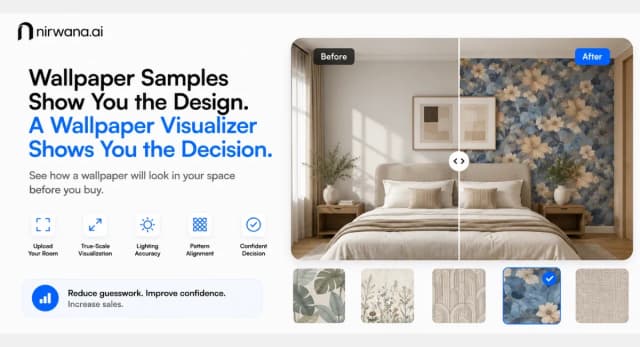
They can drag a picture of the bedroom onto a visualizer wallpaper, and they feel them and instantly get it:
how large the flowers appear on the wall,
how frequently the pattern repeats,
whether the wallpaper works with the room's existing lighting,
whether the design feels calm or overwhelming,
and whether one wall or multiple walls should be covered.
That changes the conversation from guessing to evaluating.
How Nirwana AI Works for Wallpaper Brands
Nirwana AI helps wallpaper businesses bring their real product catalogue into an interactive visualization experience.
A customer can then upload a picture of a room, or select one of the sample rooms, and apply a wallpaper design directly to the wall.
The technology automatically detects the wall surface that needs to be mapped and automatically selects the wallpaper to be mapped.
However, the key is after that.
True-Scale Visualization
Pattern scale can completely change how wallpaper feels inside a space.
Nirwana AI can help show wallpaper at a realistic scale so customers can better understand the relationship between the print, pattern repeat, and wall dimensions.
A small geometric design should not suddenly appear oversized.
Likewise, a large mural-style pattern should not look artificially compressed.
Pattern Alignment and Repetition
Wallpaper brands sell patterns, not just colours.
That means repetition and alignment matter.
The visualization should reflect how the design continues across the wall instead of simply stretching one image from corner to corner.
This is particularly important for geometric, floral, striped, and repeating wallpaper collections.
Lighting Accuracy
A wallpaper may be quite different in a bright living room versus a dimmed-down bedroom.
Nirwana AI maintains the room context in view so that the customer can view the wallpaper in the context of the existing lighting situation, not just as a stand-alone texture.
Automated Texture Mapping
If the brand has hundreds or thousands of wallpaper designs, it's not feasible to generate room renders for each SKU.
Nirvana AI could be used to map textures on wallpaper to generate products that can be visualised, which will help brands easily transform a massive digital catalogue into an interactive buying experience.
Why This Matters for Wallpaper Brands
The biggest value of a wallpaper visualizer is not that customers can play with designs.
It is that they can make decisions faster.
Consider an ecommerce wallpaper brand receiving thousands of product-page visits.
Some customers may enjoy 3 designs but may feel that they are not sure about which of the 3 would work better in their room.
They don't have to leave the website and think about the three options, they can visualize all three options at once.
A showroom salesperson can use the same concept differently.
There is no need for the salesperson to tell the customer "Try to imagine it" when the customer states that he or she is concerned that the pattern may be too bold.
They can show it.
For manufacturers and distributors, visualization can also help dealer networks demonstrate more collections without needing every wallpaper design physically displayed on a full wall.
From Product Browsing to Confident Buying
Wallpaper will always be an emotional purchase.
Customers choose it because they want a room to feel different.
But emotion alone does not close the sale.
Confidence does.
A sample tells the customer what the wallpaper looks like.
A visualizer wallpaper helps them understand what living with that wallpaper may actually feel like.
That is the difference between showing a product and helping someone make a decision.
Nirwana AI can revolutionize the customer journey by bringing visualization to the sales team's fingertips, boosting customer confidence, and making the buying process more interactive for the brands.
When your customers are still asking themselves how wallpaper will be applied, perhaps it's time that they could see it for themselves.