Half-Wall or Full-Wall Panels? How to Choose the Right Coverage
4 Min Read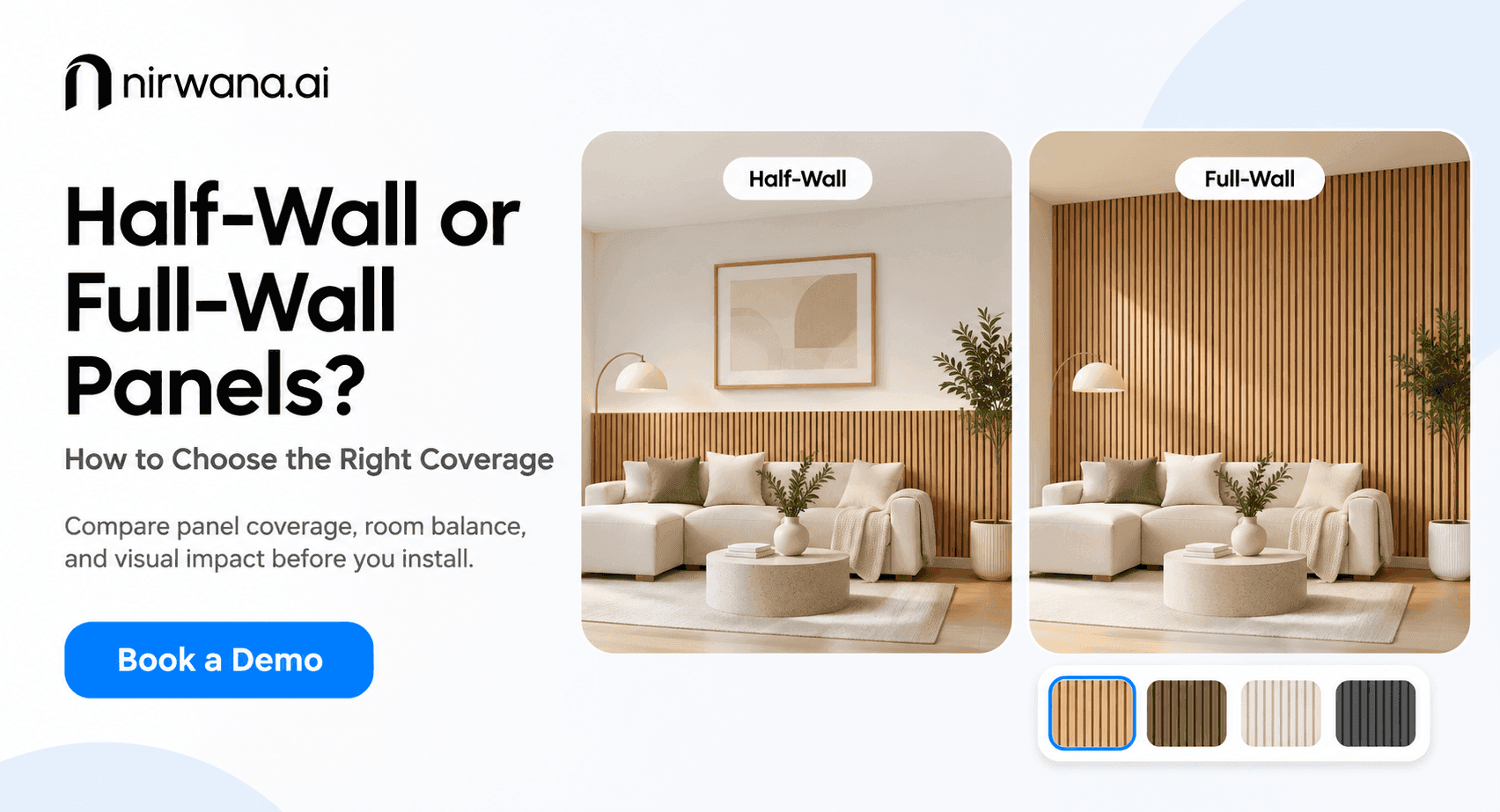
November 6, 2026
You've discovered a wall panel design you adore. It could be a warm and wooden slat panel, a textured modern setting or a simple and elegant.
Now, however, comes the hard part.
Do you need to paint all the walls or just some of them?
Perhaps you've come across a gorgeous full wall panel design on Pinterest. However, does it seem as good in your living room?
What about if it makes the space feel smaller? What about half wall panels appearing unfinished? What if you invest in materials and installation and then discover that the coverage is not correct?
They're real issues and if wall panels aren't easily replaceable after installation it can be an issue.
The positive side is that once you know what works best for your space, getting the right coverage isn't as difficult.
What's the Difference between Half Wall and Full Wall Panels?
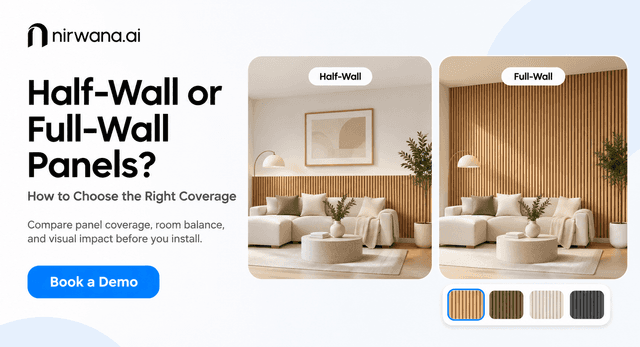
Half-wall panels are panels designed to cover half of the wall, typically down to the bottom.
Interestingly, half-wall doesn't necessarily mean covering exactly 50% of the wall. The panels can be as tall as one-third, half or even two-thirds of the panel's length, depending on the design.
They are often used in bedrooms, dining rooms, hallways, or living rooms to add a bit of texture without an overpowering presence.
As the name implies, full-wall panels completely fill the wall from bottom to top.
They make a more impactful impression and can sometimes be found in backdrops behind televisions, behind beds or even as feature walls.
Both choices are not necessarily the best.
The important thing is to determine how much visual interest you would like to put into that wall.
Will Full Wall Panels Shrink Your Room?
Let's say you have a small living room and a little natural light.
In a showroom, you've opted for dark walnut panels as your option because they look luxurious.
However, as soon as all the walls are covered, the room quickly appears more cozy and intimate than anticipated.
One of the main concerns that homeowners have when selecting panel coverage is this.
Tightly spaced patterns, heavy fabrics and dark colors can create the impression of a cramped room.
But full wall panels don't necessarily make spaces seem smaller.
Light-colored panels with minimal vertical lines can result in an open look and focus on the ceiling.
Consider the space size, natural lighting and current furniture before making a decision.
If covering one section does create a better balance than covering the entire wall, then that is what you do.
Where are Half-Wall Panels Better Suited?
Consider a basic bed, two side tables and a relatively low ceiling in a bedroom.
You might not have to install panels all over the back of the bed, but just add panels to the lower part of the bed behind.
The outcome will be more nuanced, yet still give texture and character.
Half walled panels can also be used in hallways, where the full height decorative panels might seem too overpowering.
Depending on the material, can help protect areas of lower wall from normal scuffing.
However, there is something that one should check out.
What is the end of the panel?
Even if the design is fancy, if it does not flow out of the furniture, switches or windows it can feel unfinished.
This is why the height of panels and their alignment are equally important to consider as much as the design.
When does Full-Wall Coverage Make More Sense?
Imagine a roomy living room equipped with a large, unbroken TV room wall.
There may be a few bits and pieces of paneling that don't seem to fit into the picture.
For this, a full-wall application may provide more 'whole cloth' effect.
The same holds true with some bedrooms, tall ceilings or feature walls where you would like one surface to be the focal point of the room.
Don't necessarily need to cover all walls, though.
In many cases, a single feature wall can add depth and interest to the room without overpowering it.
Don't Forget Panel Size, Alignment, and Cost
One of the things that you should not miss while checking out wall panel designs online is this.
What looks nice in a close-up shot of a product in a photo can look completely different in a large product spread.
The fluted or slatted panels have a global impact on the appearance, both in terms of the spacing and alignment.
If you are not careful with the edges and cuts, the finished wall may not be consistent.
Cost matters too.
Typically, you will need more material for a full wall installation than for a half wall installation, and may want to add finishing trims or edge details to the half wall installation.
When purchasing, take the measurement of your wall, determine any obstacles such as windows and switches, and determine the actual coverage area.
Check if your wall is appropriate for installation. A visual inspection will not identify moisture issues, nor will it assure the performance of the adhesive used.
Before installing anything, check Both Options.
Won't it be simpler to compare half-wall and full-wall panels in your actual room before buying the panels?
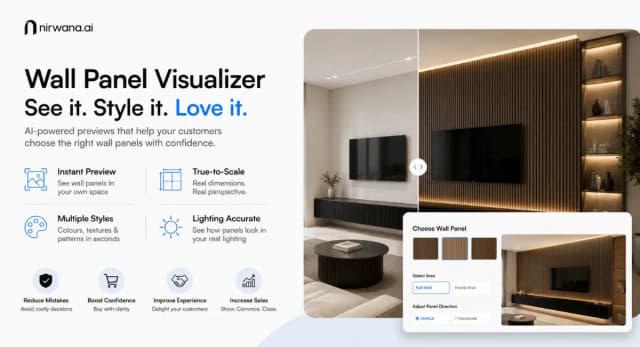
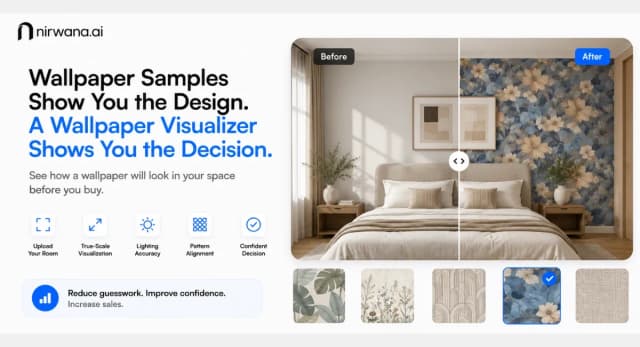
This is where a wall panel visualizer tool comes in handy.
Upload a photo of your room and use Nirwana AI to find out what looks good with various wall panel designs.
The AI can recognize wall surfaces, map out panels selected by the user with respect to perspective, scale, pattern alignment and existing lighting.
Consider different panel placement, multiple panel arrangements and full wall applications to understand the impact of these different coverages on your room.
As an example, if a customer selects wooden panels for a bedroom, they may first experiment with a small piece of accent wall before opting for an entire wall.
A wall panel visualizer can make those comparisons more real than just imagining.
It is also a handy tool for wall panel companies and retailers to give their customers a better idea of what a product will look like in their rooms, but not when they are judging a small sample on a catalogue.
Digital previews should be backed up with material samples and accurate measurements prior to final installation, of course.
So, which coverage should you select?
There is no one right or wrong answer.
Consider using half wall panels if you want a bit of texture, a lighter look, or need a focal point for coverage.
If you're designing a feature wall or are interested in a more seamless look, full-wall panels might be a better option.
You need to compare both and see how the lighting will function in your room, and compare how the panels will look in your room with your furniture.
The purpose isn't to cover as much wall as possible. Your task is to decide on the quantity of coverage that will truly enhance your room.
Looking for inspiration on the various different types of wall panel designs that could be used in your space?