Floor Visualizer vs Samples: Which Helps You Choose?
4 Min Read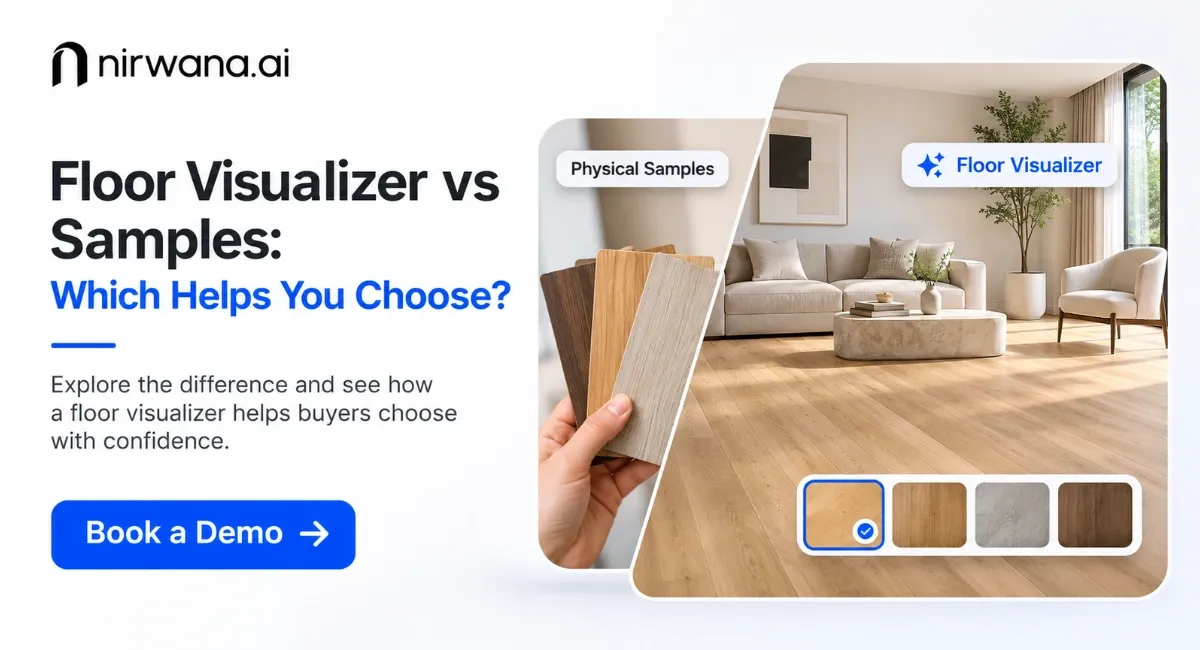
November 18, 2026
It can seem straightforward until you begin to compare options when deciding on new flooring.
You go into a showroom and grab some samples and think, "How would these look in my living room?You walk into a showroom, grab a few samples and imagine how they would look in your living room! However, very little of the floor will tell you much.
Does the dark wood color make your room seem smaller? Will the pattern be too busy on the entire floor? What does the sun do when it shines?
These are the questions that the customers ask on a daily basis.
While physical samples work well, a floor visualizer offers another aspect they can't – the opportunity to visualize flooring in a room before ordering it.
So, which one really assists you to select better?
Why Physical Flooring Samples Aren't Always Enough
For decades, flooring samples have been a part of the buying process; and there's a reason why.
They enable customers to feel it, look at its surface and appreciate its finish.
But there's one limitation.
A small sample won't reveal the look of the flooring throughout a room.
Suppose that a customer is selecting two different SPC designs for their floor. Both is quite appealing for the showroom display.
The one is light oak finished, and the other is darker wood.
Both are favorites to the customer but he/she can't determine which will work in harmony with their furniture and wall colors.
They may bring samples home, solicit opinions from relatives, or just put off buying.
In the case of flooring retailers, it can result in longer conversations to sell and longer time to decision.
How a Floor Visualizer Changes the Buying Experience
Today, customers are looking for more than just images and sample boards.
They want to know what the product's going to look like in their space.
That's where a floor visualization tool can be helpful.
Consumers have the option to upload a photo of their room and check out a few different flooring options virtually.
They can compare light and dark shades, patterns, and how a specific pattern and color of flooring will work with the other interior decorations.
For instance, when a person is upgrading a bedroom, he or she can actually view several different designs of laminate flooring before installing any.
This makes the process of choice easier and it also helps customers narrow down their choices prior to visiting a showroom.
Floor Visualizer vs Physical Samples: What's the Difference?
Both methods serve different purposes.
Physical Flooring Samples | Floor Visualizer |
Show actual material texture | Shows flooring across a room |
Help evaluate physical finishes | Helps compare colors and patterns |
Offer a small-area reference | Provides a broader visual preview |
Require physical handling | Can be explored online |
Help confirm material quality | Help shortlist suitable designs |
The best buying experience combines both.
Customers can use visualization to narrow down their choices and physical samples to confirm the final texture, finish, and color.
How Nirwana AI Makes Flooring Selection Easier
For flooring brands and retailers, it can facilitate the visualization of a product for customers, making the buying process a lot easier.
Nirwana AI has an AI visualization feature of the floor that allows customers to view floor designs in realistic rooms.
Some of the following is how it works.
1. Preview Flooring in a Real Room
Customers can upload their room photograph or select a preset room to explore how different flooring products might look.
2. See Realistic Flooring Proportions
True-scale visualization helps represent flooring dimensions more realistically, giving customers a better understanding of plank sizes and overall appearance.
3. Explore Different Layouts and Patterns
Whether customers prefer straight layouts, herringbone, or other supported patterns, they can compare how different arrangements change the room's appearance.
4. Understand Lighting and Color
Lighting can significantly influence how flooring appears. Realistic lighting previews help customers understand potential differences, although actual colors may vary depending on natural light, screens, and material finishes.
5. Apply Flooring Designs Automatically
AI-powered surface detection and automated texture mapping help place flooring designs onto the room's floor area, reducing the need for manual editing.
Why Flooring Brands Should Offer Visualization
Imagine a manufacturer of flooring that offers hundreds of vinyl, SPC, WPC and laminate options.
A customer on their website might enjoy a number of products, but may not be able to visualize which one would fit their home best.
The brand can provide a more interactive experience on its website, or in a showroom, with a floor visualization tool.
Buyers can browse the collection, make comparisons, and even save their favorites, before getting in touch with the sales crew.
For retailers, it provides the opportunity to engage in more targeted discussion.
The salesperson doesn't have to begin with dozens of samples, but can talk about the type of flooring that the customer already likes.
Visualization is not a substitute for the knowledge of the product or physical inspection. It does this by making the first step of the decision-making process easier.
Final Thoughts: Which One Should You Choose?
Customers can get an idea of what flooring feels like using a physical sample. They visualize with digital means and see how this might look in their space.
There is no need to replace either.
The opportunity is for flooring manufacturers to combine these experiences.
Nirwana AI's floor visualizer solution allows businesses to provide their customers with a more user-friendly experience when exploring a selection of flooring options, comparing designs, and making a more informed purchase decision.
Looking for help when choosing flooring for your customer?
Discover Nirwana AI's flooring visualization tool and request a demo to understand how it can benefit your brand.