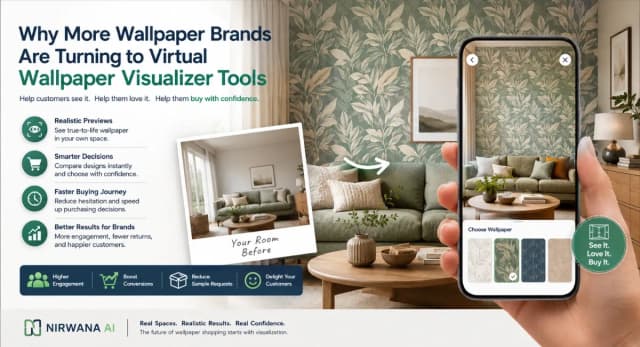
Why More Wallpaper Brands Are Turning to Virtual Wallpaper Visualizer Tools
4 Min Read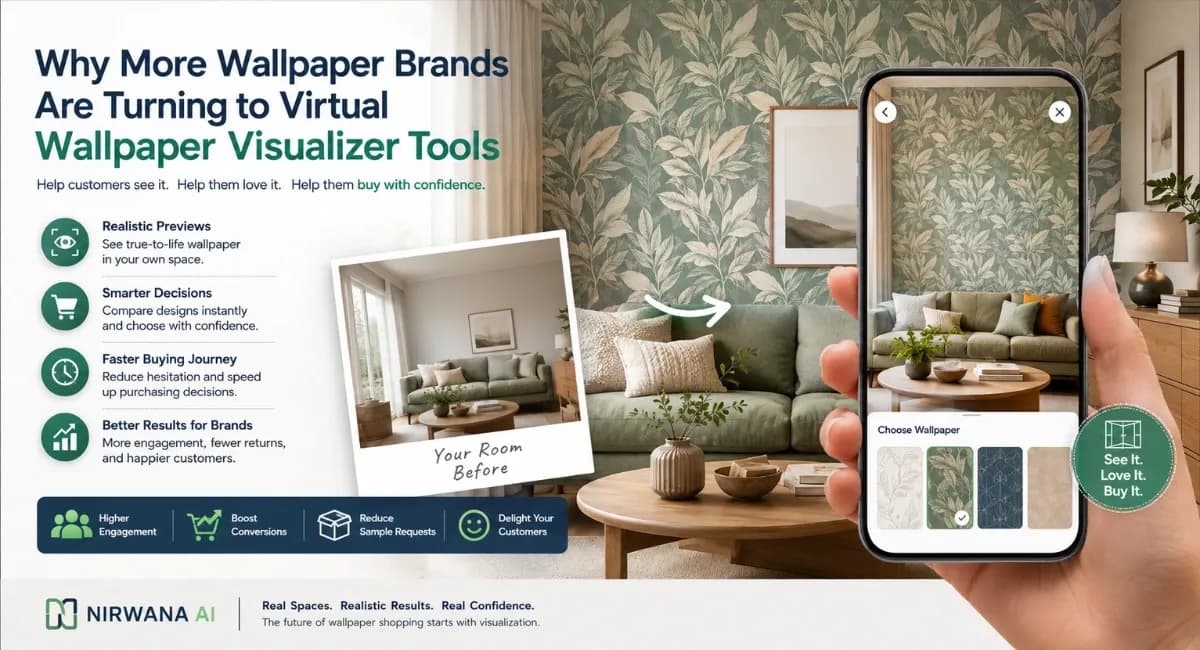
June 2, 2026
If you are into wallpaper selling for some time, then you would have come across the same question hundreds of times.
“How will the wallpaper look around my room?”
It's a good inquiry.
Wallpaper is one of those items which can be transformed drastically when it makes its way onto a customer's wall. What's a charming pattern on a test swatch can seem overwhelming in a whole room. The delicacy of texture can get lost in some situations. Even the shade might seem different in the furniture, flooring, and in the light of natural light in the space.
The problem is that the customer is expected to make a design decision for hundreds or thousands of dollars on a sampling of the customer's life or a few random lifestyle shots.
Selling is becoming increasingly difficult these days.
Individuals do not want to visualize any longer. They want to see.
That's precisely why demand for a virtual wallpaper visualizer tool has skyrocketed in the past few years.
The Problem Most Wallpaper Brands Still Face
Let's be honest.
The vast majority of wallpaper sites remain the same.
The customer checks the website, looks through a catalog, clicks on a product page, rolls around a few images and possibly orders a sample.
For the brand, that's a normal process.
There's still uncertainty on the customer side.
They are wondering:
Will this pattern make my room look smaller?
Is the scale too large for my wall?
Will it match my furniture?
What will it look like in daylight?
What happens when it covers an entire wall instead of a small sample piece?
Those doubts slow down purchasing decisions.
We've seen customers spend days comparing designs simply because they cannot picture the final result.
And when customers hesitate, conversion rates suffer.
Buying Behaviour Has Changed
A few years ago, customers were comfortable relying on inspiration photos.
Today they expect personalization.
They want to experience furniture in their room before purchasing!
Their first step in purchasing paint is to "try out" colors virtually.
They don't want to waste money on wallpaper unless they know exactly how it will appear on their wall.
This move is by no means confined to younger buyers. We're seeing it in homeowners, interior designers, architects and commercial buyers.
The simple expectation is:
"Show me my space, not somebody else's."
That's where a modern visualizer wallpaper solution becomes incredibly valuable.
Why Visualization Creates Confidence
When customers can upload a photo of their room and instantly apply different wallpaper designs, something interesting happens.
The conversation changes.
Instead of asking whether the wallpaper will work, they start comparing which wallpaper works better.
That is a huge difference.
The decision moves from uncertainty to preference.
We've seen customers eliminate dozens of options within minutes because they can finally see what fits their space.
For wallpaper brands, that means shorter buying cycles, better engagement, and more confident customers.
How Nirwana AI Makes Wallpaper Visualization Feel Real
At Nirwana AI, we didn't want to create another visualization tool that simply pastes a wallpaper image onto a wall.
Customers are smart. They can immediately tell when a visualization looks fake.
That's why realism matters.
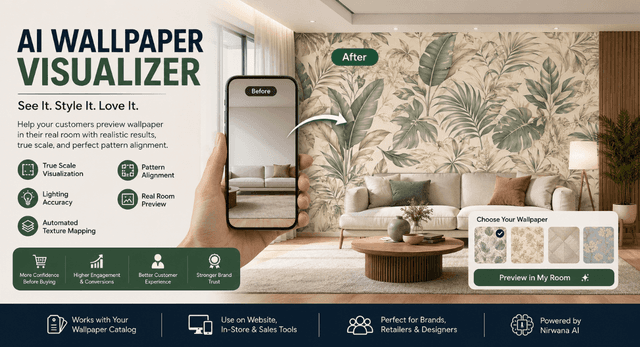
Our platform automatically detects wall surfaces inside a room image and applies wallpaper designs with accurate perspective, scale, and pattern placement.
If a wallpaper contains repeating geometric patterns, those patterns remain aligned.
If the wallpaper has texture, the texture follows the surface naturally.
If the room has shadows or varying light conditions, the wallpaper adapts to those conditions instead of looking like a flat sticker placed on top of the image.
The goal is simple:
Give customers a preview that feels believable enough to support a buying decision.
A Real Example
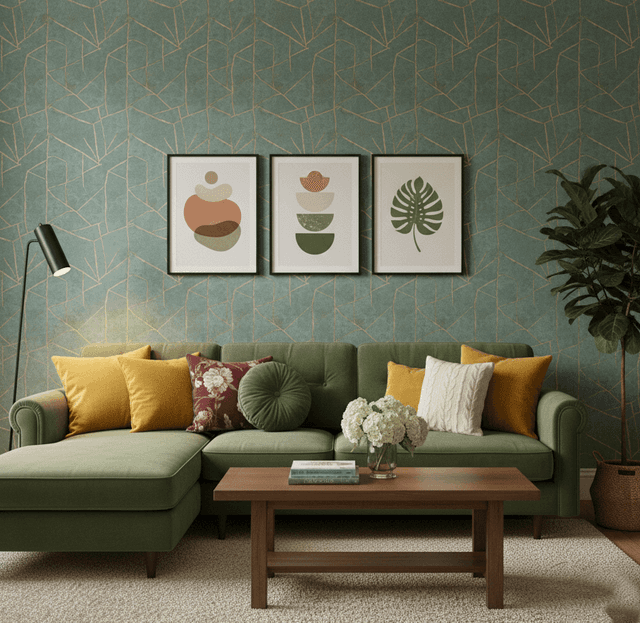
Imagine a wallpaper retailer offering a collection of modern botanical designs.
A customer loves three patterns but cannot decide between them.
Without visualization, the customer may order multiple samples and spend several days evaluating options.
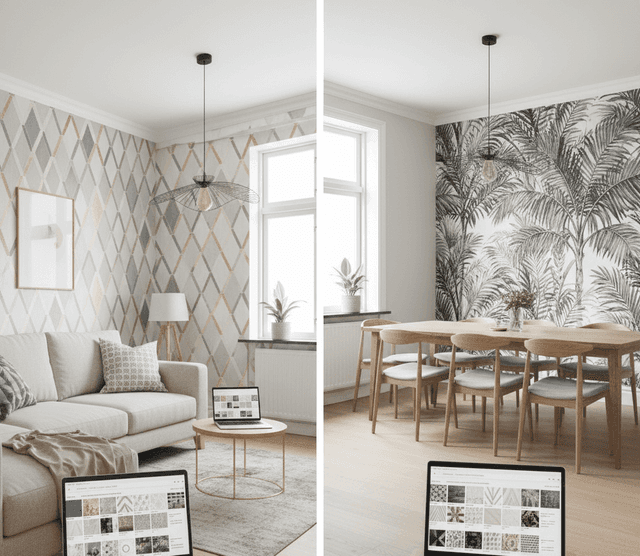
With a virtual wallpaper visualizer tool, the same customer uploads a photo of their living room and tests all three designs within minutes.
Suddenly, the choice becomes obvious.
One pattern feels too busy.
One looks too dark.
One fits perfectly.
The customer moves forward with confidence.
That's the power of visualization.
Why Wallpaper Brands Are Adopting This Technology
The brands adopting visualization technology today are not doing it because it's trendy.
They're doing it because it solves real business problems.
It helps customers make decisions faster.
It increases engagement on product pages.
It reduces uncertainty.
It minimizes unnecessary sample requests.
Most importantly, it creates a better customer experience.
In an industry where design confidence directly influences purchasing decisions, that advantage matters.
The Future of Wallpaper Shopping
Wallpaper is an emotional purchase.
People aren't buying rolls of material.
They're buying a feeling.
They're buying the atmosphere of a bedroom, the personality of a living room, or the character of a commercial space.
The brands that help customers visualize that future before they buy will have a significant advantage over those that don't.
A realistic visualizer wallpaper experience removes guesswork from the process and replaces it with confidence.
At Nirwana AI, that's exactly what we're helping wallpaper brands achieve.
If your customers are still trying to imagine how wallpaper will look in their homes, it's time to give them something better.
It's time to let them see it.