AI Tile Visualizer with True-Scale Room Preview & Layout
4 Min Read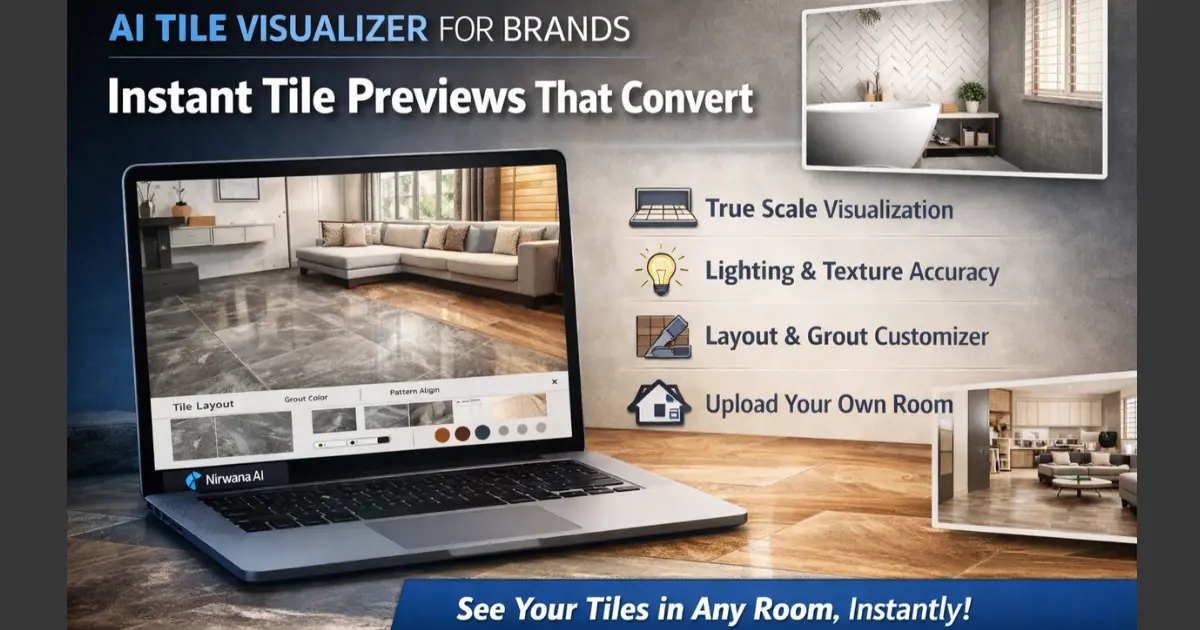
February 17, 2026
Most tile brands today don’t lose customers on price or product. They lose them in the moment of hesitation — when a shopper can’t quite picture how that beautiful tile will actually look in their own space. That’s where an AI tile visualizer stops being a “nice-to-have widget” and becomes a serious conversion engine.
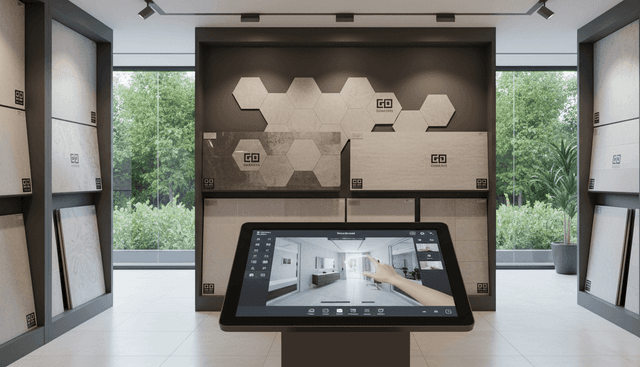
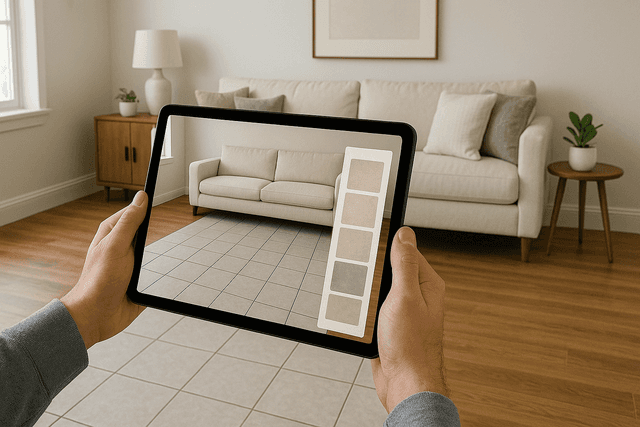
If you’ve ever watched a customer in a showroom holding a sample against a wall, squinting, taking photos, then disappearing for weeks, you know the gap. The brands that close that gap with an instant tile preview in room — at true scale, with realistic lighting and layout — are the ones quietly pulling ahead online and in-store.
The Real Problem: Imagination Is Slower Than Intent
Most digital tools in this space still behave like glorified mood boards. They show a pattern, maybe a generic room, but they don’t bridge the psychological distance between “I like this tile” and “I’m ready to order 65 square meters of it.” That distance is where carts get abandoned and quotes go cold.
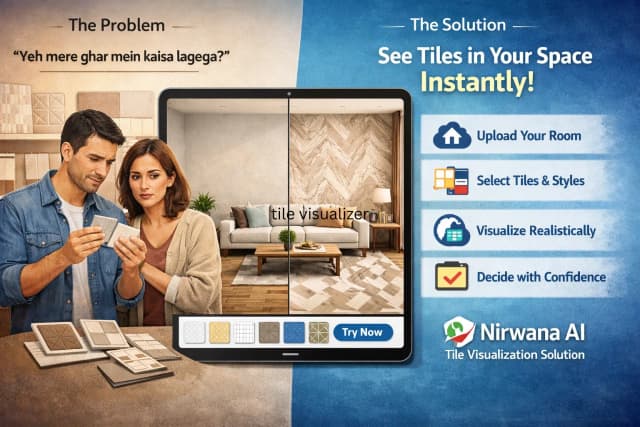
We hear the same line from customers over and over: “I just can’t picture it.” They don’t trust thumbnails. They don’t trust staged lifestyle photography. And they definitely don’t trust color and scale from a flat product page. When the tile visualizer feels off — wrong scale, odd grout lines, unrealistic shadows — it actually increases doubt instead of reducing it.
This is why an AI tile visualizer that works at true scale, respects pattern alignment, and responds to room geometry is not a cosmetic upgrade. It’s a direct lever on:
- Time to decision
- Average order value
- Return and complaint rates
- Sales team efficiency in showrooms
Once you see how customers behave with a precise tiles visualizer versus a generic one, it becomes obvious: this is infrastructure, not marketing fluff.
What a Modern AI Tile Visualizer Must Actually Do
1. True-Scale Room Preview, Not a Wallpaper Trick
Most “tile visualizer tools” simply stretch a pattern over a surface. It looks fine in a screenshot, but any architect or homeowner with a tape measure will sense something’s wrong. If a 600x600 tile renders like a 400x400 on their kitchen floor, trust evaporates.
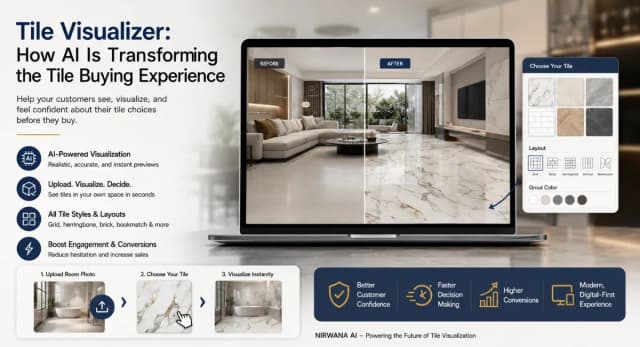
A serious tile visualizer calculates real-world scale from the room photo, then places tiles accordingly. Joints, offsets, and cuts match how an installer would actually lay them. Customers instantly notice the difference — not because they measure pixels, but because it finally feels believable.
2. Realistic Lighting and Material Response
Tiles don’t live in a vacuum. They live under cold morning light, warm pendants, and the odd badly placed downlight. If your tile visualization software for brands ignores lighting, glossy tiles look flat and matte tiles look plastic.
Modern AI can infer light direction and intensity from a single photo, then shade tiles so they sit naturally in the space. It’s a quiet detail, but it’s the difference between “cool effect” and “I can see this in my house.” In testing, this alone tends to increase time-on-page and the number of layouts customers explore.
3. Pattern Alignment and Layout That Respects the Craft
Installers obsess over pattern alignment. Customers don’t have the vocabulary for it, but they feel it when it’s wrong. If your layout engine breaks a herringbone at the door threshold or misaligns a feature wall, pros will dismiss the tool, and homeowners will subconsciously lose confidence.
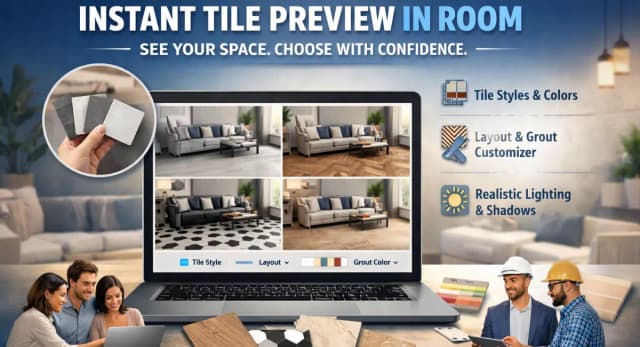
A capable AI tile visualizer understands patterns, directions, and layout rules. It keeps veins aligned on marble effect tiles, respects borders, and handles tricky transitions. When customers can play with a tile layout & grout customizer and see those rules hold up, they start designing instead of just browsing.
4. Frictionless Instant Tile Preview in Room
The last piece is speed. If it takes five steps and an email signup before someone sees a realistic tile preview online, you’ve already lost them. The best implementations feel almost casual: upload or snap a photo, pick a tile, get an instant result, then refine.
Under the hood, there’s complex segmentation, surface detection, and rendering. On the surface, it needs to feel like a natural part of the buying journey — not a side quest. The more invisible the tech, the more visible the impact on conversions.
Why Tile Brands Are Quietly Rebuilding Their Visualizers
Across both enterprise brands and fast-growing regional players, the pattern is similar. Once they see session recordings of customers actively designing in the tile visualizer tool — swapping tiles, rotating patterns, testing grout colors — the business case stops being theoretical.
Teams report three consistent outcomes:
- Shorter sales cycles, because “I need to think about it” becomes “this is what it will look like.”
- Higher confidence in larger, riskier choices like full-height bathrooms or large-format slabs.
- Better-qualified leads walking into showrooms with saved layouts on their phones.
On the operations side, a strong tiles visualizer reduces back-and-forth on expectations. Fewer “this looks darker than online” complaints. Fewer last-minute spec changes. And for brands working with distributors, it becomes a shared asset that standardizes how the collection is sold across markets.
Scalability matters too. New collections, finishes, and formats need to drop into the system without a three-month development cycle. When the underlying AI understands surfaces and layouts generically, marketing teams can refresh the experience as fast as product teams release tiles.
Where This Is Heading — And What to Do About It
We’re past the phase where a basic tile visualizer is a differentiator. Customers now expect to see their own rooms, not stock kitchens. The next competitive edge is accuracy and ease: true scale, real light, smart layouts, and a smooth path from “preview” to “add to quote.”
If you’re leading a tile brand, the practical question isn’t “should we have a visualizer?” It’s “does our current experience actually reduce doubt, or is it just decoration on the website?” That’s the gap an AI tile visualizer with true-scale room preview and layout can close — both online and in the showroom.
The brands that treat this as a core part of their product experience, not a side project, are the ones whose sales teams start hearing a different kind of opening line: “I’ve already tried this in my room — can you help me make it real?”