Rug Placement Mistakes a Rug Visualizer Can Help You Avoid
4 Min Read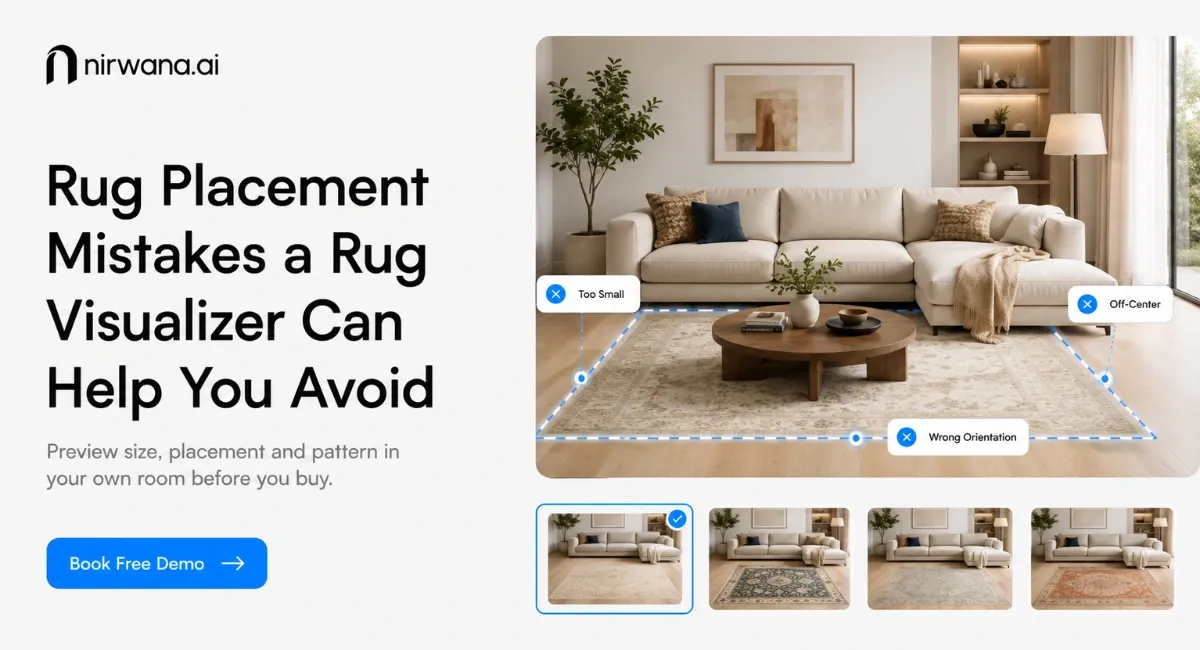
July 30, 2026
There is a lot of simplicity in selecting a rug until it is inside the room.
A rug can have an attractive appearance in a product image, showroom or catalogue, but may look completely different when it is underneath a sofa, dining table or bed. It may be too small, too large for the room's floor space, etc., and may not fit with the furniture or make the room look unbalanced.
One of the most difficult aspects of purchasing a rug is this. Customers are not just picking out a colour or pattern. They are also determining how the rug will fit in the size of the room, the furniture and the design of the room.
A rug visualizer can assist clients make this choice with more assurance, because they will be able to see the rug in their own space before they buy it.
Why Rug Placement Is Difficult to Imagine
Most people have a hard time determining the proportions of a rug by its measurements.
They might be able to tell that a rug is 5' x 7', 8' x 10' or 9' x 12', but that can be hard to imagine without seeing them in the room.
A large rug in the picture can seem smaller in person when used under a sectional sofa. Another rug might lie under the dining table but not offer a sufficient amount of room for chairs to be pulled out while still being on the rug.
Customers also need to determine if the rug needs to:
Sit completely beneath the furniture
Cover only the front legs of the sofa
Be centred under a coffee table
Extend equally on both sides of a bed
Sit horizontally or vertically
Leave visible flooring around the edges
These placement decisions have a major effect on the final appearance of the room.
Without an accurate preview, customers often depend on guesswork.
Common Rug Placement Mistakes
The most usual error is picking a rug that is too little.
A small rug can make the furniture appear disconnected and make a large room feel unfinished. In living rooms, there are some who actually select a rug that only covers the bottom of the sofa and chairs, which sit above the rug.
Another big challenge is selecting a rug that is too big. A large rug can also overcrowd a space, make one area appear to blend into another and take up much of the space on the floor.
Problems can also occur if the object is not positioned correctly.
A rug can be positioned too near to one wall, a bit off centre or angled to not fit well with the furniture. Any misplacement can have an impact on the overall balance of the room.
Another thing that customers might not consider is the pattern direction. Striped or geometric rugs can look great on the internet but can make a room look longer, wider or more restrictive when installed in a narrow room.
An AI rug visualizer is a tool that enables buyers to visualize these differences before deciding.
How Buying Behaviour Is Changing
Home customers also have come to expect being able to view items digitally prior to purchase.
In the case of rugs, traditional product images may not suffice. The pictures in most catalogues are of a rug in an elegantly furnished room, but the size, flooring, furnishings and lighting in a catalogue may differ from the customer's.
Customers are looking for how the product will look in their space these days.
A rug visualizer enables people to upload a picture of their living room or bedroom, dining space or office area. They can try out various rug choices on the ground and contrast the different products in the space.
Instead of asking, “Will this rug work here?” customers can see the answer.
This makes the buying journey more interactive and reduces hesitation.
How Nirwana AI’s Rug Visualizer Works
Nirwana AI helps rug brands, manufacturers, retailers and dealers offer realistic rug previews through their websites, showrooms and sales teams.
The customer uploads an image of the room or chooses a preset space. The system identifies the floor area and places the selected rug within the room.
The rug is not simply pasted onto the image.
Nirwana AI uses automated texture mapping to align the rug with the perspective of the floor. This helps the product appear naturally positioned within the space.
Brands can upload their own rug catalogue, including different sizes, colours, patterns and shapes. Customers can then explore real products from the brand instead of viewing generic designs.
True-Scale Visualization for Better Placement
Scale is one of the most important parts of rug visualization.
Nirwana AI can render a rug that matches its true size, and therefore makes it easier for customers to make accurate comparisons between sizes.
For instance, a customer may try out an 8 x 10 foot rug, along with an 9 x 12 foot rug, underneath the same sofa set.
The smaller rug can only be placed under the front legs of the furniture while the larger rug can come together and form the entire seating area.
This visual comparison makes the difference easier to understand than measurements alone.
True-scale visualization can also help reduce incorrect orders, exchanges and returns.
Pattern Alignment and Realistic Lighting
Rug patterns can alter the balance in a space.
You might want to use a large pattern in a small room or a small pattern in a large open space.
Nirwana AI assists the customer in seeing the entire pattern on the floor area rather than based on the product image.
The system also considers room perspective and existing lighting.
A rug may appear warmer under yellow lighting, lighter near windows or darker beneath furniture. Realistic previews help customers understand how the rug’s colour and pattern may behave in the actual room.
Practical Use Cases for Rug Brands
A rug manufacturer can integrate the visualizer into its website so customers can explore different collections in their own rooms.
A retailer can use the rug visualizer inside a showroom to compare multiple sizes and styles during the sales conversation.
A dealer can create visual options and share them with customers through email or messaging platforms.
Sales teams can also use previews as part of the presentation, quotations, and follow up communication.
For instance, if the customer is looking at three rugs for their living room, they can be given three realistic images of the rugs in varying sizes, positions and patterns. This ensures that the final decision is quicker and more assured.
Better Placement Leads to Better Purchases
A rug does more than cover the floor. It defines the seating area, connects the furniture and influences the balance of the entire room.
When customers cannot imagine the correct size or placement, they may delay the purchase or select the wrong product.
Nirwana AI’s AI rug visualizer helps brands replace guesswork with a realistic, visual buying experience.
With true-scale previews, accurate positioning, automated texture mapping, pattern alignment and lighting awareness, customers can understand how a rug will look before it arrives.
For rug brands, this means stronger product presentations, more confident customers and fewer placement-related purchase mistakes.
Help your customers choose the right rug and place it with confidence. Book a demo with Nirwana AI and bring your rug catalogue into every customer’s room.