AI Furniture Visualizer: Help Customers Buy with Confidence
4 Min Read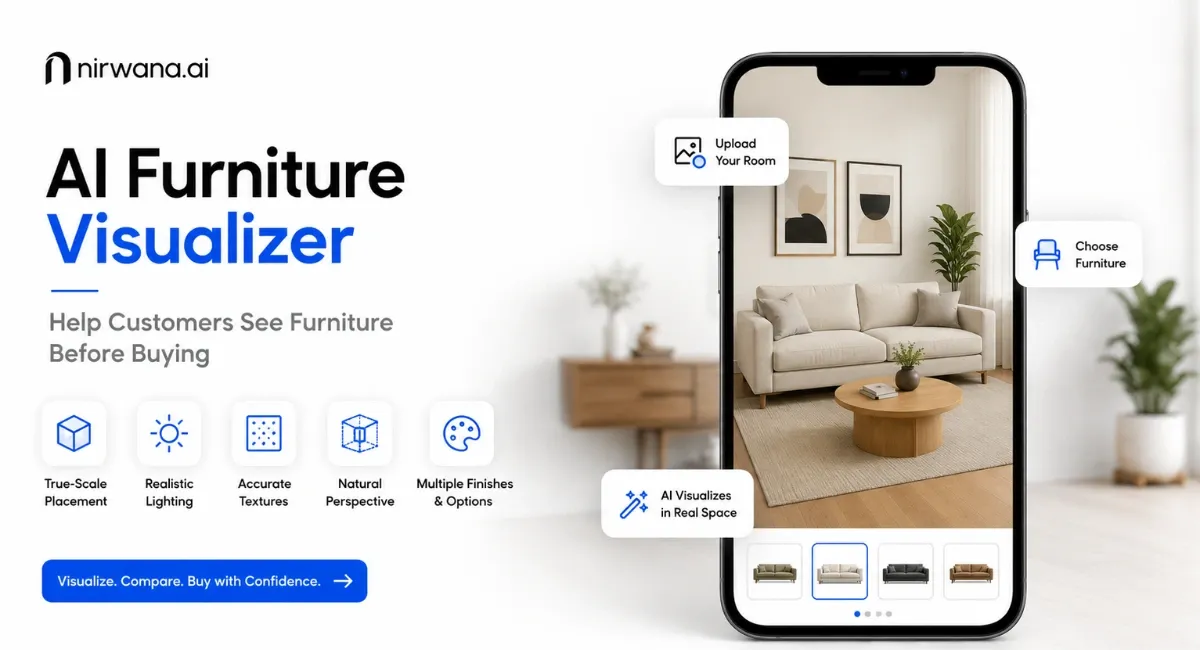
June 25, 2026
Purchasing furniture is a combination of emotional and practical. A sofa can be a great fit in a showroom but feel too big in a customer's home. The lighting at home can also have an effect on the appearance of a dining table.
This gap between seeing a product and imagining it in a real space creates hesitation. Customers compare options, request more images, revisit showrooms, or delay the purchase.
An AI furniture visualizer removes much of that uncertainty. Instead of asking customers to imagine the result, furniture brands can show how a selected product may look inside the customer’s own space before they buy.
The Real Visualization Challenges Furniture Brands Face
Product photographs do not always answer the questions that matter most. Will this sofa suit my wall colour? Is the coffee table too wide?
Size is one of the biggest concerns. Measurements on a product page are important, but many customers cannot convert centimetres into an accurate mental picture. This is especially difficult with sofas, beds and dining tables.
The surroundings also affect the behaviour of finishes. Wood grain, upholstery, leather and metal accents and other shiny surfaces look different under various lighting, shadows and surrounding colors. A little piece of fabric can't tell you the whole story about a sofa in its home.
Furniture Buying Behaviour Is Changing
Nowadays, customers are looking for more than catalogues and lifestyle photos. They're looking for a buying experience they can relate to their own home, and that's personal.
This is where AI furniture is changing the journey. A customer can upload a photo of a living room, bedroom or office and view a selected product within that environment.
Consider a sofa brand offering the same model in several fabrics. Instead of showing every buyer the same staged room, the brand can let customers compare beige, olive and charcoal upholstery in their actual living area. Each option appears alongside the customer’s walls and furniture, making the decision easier.
How an AI Furniture Visualizer Improves the Experience
A useful furniture visualizer should do more than paste a product image over a room photograph. The preview must look believable enough to support a real purchase decision.
Nirwana AI positions furniture naturally by considering the perspective, layout and visual conditions of the uploaded space. The product feels like part of the room rather than a flat graphic.
True-scale visualization helps customers understand how the item fits within the available area. This reduces uncertainty around proportions, especially for larger products.
Lighting accuracy is equally important. The preview respects the brightness, shadows and colour temperature of the original room. A cream sofa should not appear unnaturally white in a warm interior, while a wooden table should retain the character of its real finish.
Automated texture mapping helps present upholstery patterns, stitching, wood grain and surface details consistently. Pattern alignment is especially valuable for printed fabrics, repeated motifs and visible grain direction.
How Nirwana AI Works for Furniture Brands
A customer posts a picture of their space, or they pick an appropriate image from the library of photos of rooms.A customer posts a picture of their space or they pick an appropriate room picture from the library of images. They select a product from the brand's digital catalogue and the AI furniture visualizer puts it into the scene, applying perspective, scale, lighting and shadows.
Brands can integrate this experience into their website, e-commerce process or showroom process. Salespeople can compare products during consultations without moving furniture around the store.
Instead of discussing whether a product might work, the salesperson and customer can focus on which model, finish or configuration looks best.
Features and Business Benefits
For customers, the main benefit is confidence. They can better understand whether a product fits their space, suits the interior and complements what they already own.
For brands, a furniture visualizer can improve engagement, support faster decisions and reduce repeated questions. It also helps shoppers explore finishes that may not be physically displayed.
Furniture Manufacturers and Retailers
Brands can display a larger range of products without having to build dozens of pricey styled displays and/or maintaining all of the product variations within the showroom.
E-commerce Furniture Stores
Online stores can address one of the biggest barriers to digital furniture purchases: uncertainty about how the product will look in the customer’s home.
Custom Furniture Companies
For businesses that sell made to order sofas, chairs, beds or tables, they can allow their customers to see the different fabrics, materials and configurations before the production process begins.
Furniture Sales Teams
Sales representatives can use realistic previews during consultations, follow-ups and quotation discussions, making their recommendations easier for customers to understand.
Turn Furniture Products into Confident Decisions
Customers do not simply buy a sofa, table or chair. They buy the way they believe their space will look and feel after the product arrives.
An AI furniture visualizer helps brands communicate that outcome clearly.
Realistic previews, true-scale placement, lighting accuracy, pattern alignment, and automated texture mapping make the furniture buying process more visual, personal and convincing with Nirwana AI.
Get a glimpse of how Nirwana AI can transform your catalogue of furniture into your customers' homes and assist them in making decisive buying choices without doubt.